
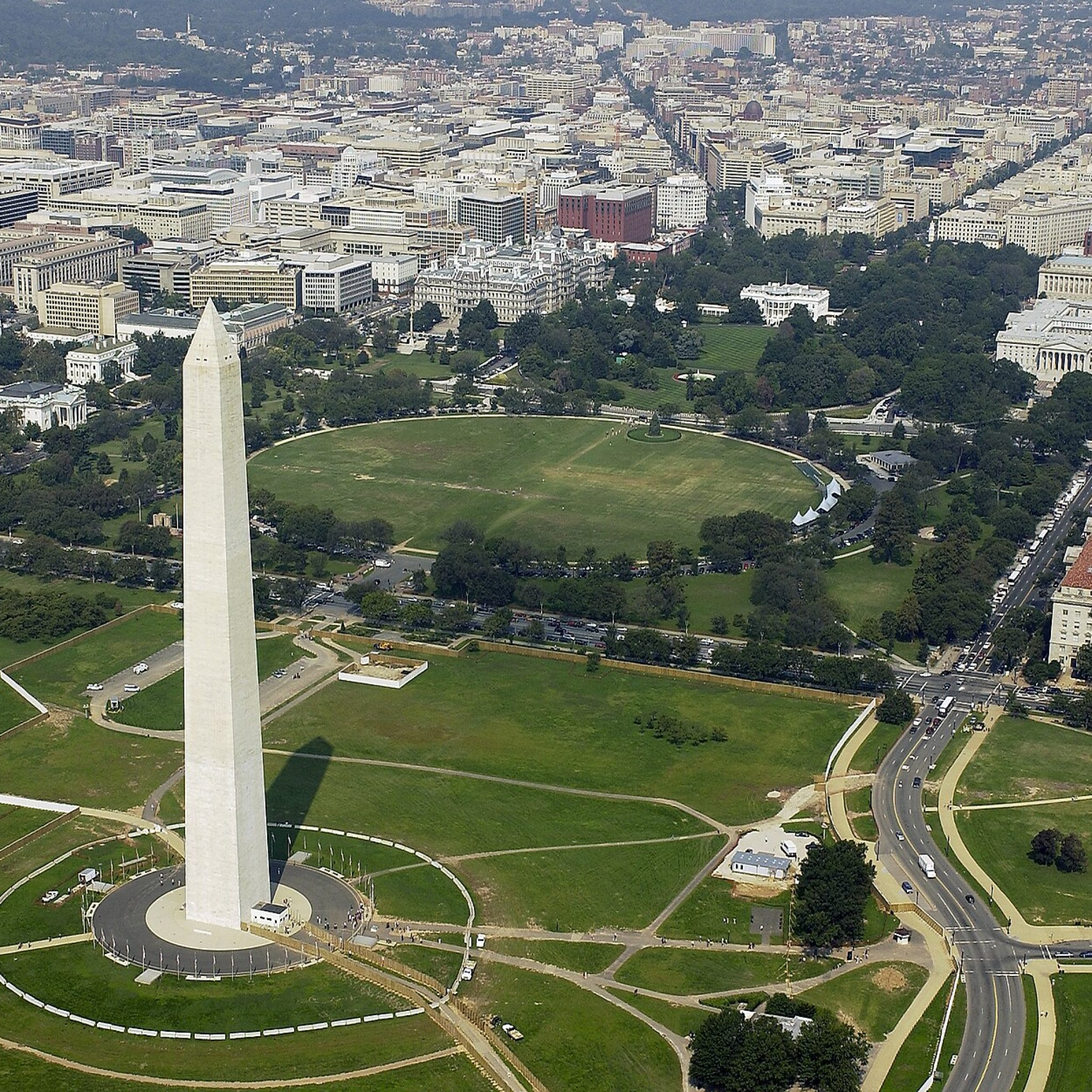
Three days is the right amount of time for Washington DC. Day one on the National Mall and the monuments, day two on Capitol Hill and the museums that need passes, day three in Arlington and Georgetown (or Mount Vernon). Most of the big sights are free. The catch is that several of them need a timed ticket booked days or weeks ahead, and the itinerary falls apart if you skip that step.
Ticket rules checked against the official NPS, Smithsonian and Capitol Visitor Center sites on October 25, 2026, by the Private USA Tours planning team.
Book these before you fly
This is the part most DC itineraries leave until the end. Do it first.
| What | Cost | When to book |
|---|---|---|
| Washington Monument | Free, $1 booking fee online | Released on Recreation.gov 30 days ahead at 10:00 a.m. ET; a second batch goes out the day before |
| US Capitol tour | Free | Up to 90 days ahead on the Capitol Visitor Center site |
| White House tour | Free | Through your member of Congress (US citizens) or your embassy (international visitors); request 21 days to 3 months ahead |
| National Air and Space Museum | Free timed pass | Passes released in batches about a month ahead; some same-day passes from 8:30 a.m. |
| National Museum of African American History and Culture | Free timed pass | Book online ahead, especially March to August |
| Library of Congress (Jefferson Building) | Free timed pass | Book online ahead |
Washington Monument tickets go fast. The NPS page says the 30-day release often sells out right away, so set an alarm for 10:00 a.m. Eastern. If you miss it, free same-day tickets are handed out at the Washington Monument Lodge on 15th Street, first come, first served.
White House tours are the hardest. Requests are not guaranteed and the confirmation can come late, so build the rest of the trip so it still works if it falls through.
Day 1: the National Mall, end to end
Start at the Washington Monument with your timed ticket. The elevator takes you to the observation level at 500 feet, and on a clear morning you can see the whole Mall laid out in a straight line from the Capitol to the Lincoln Memorial.
From there walk west. The National World War II Memorial is a five-minute walk. Keep going along the Reflecting Pool to the Lincoln Memorial and climb the steps; the spot where Martin Luther King Jr. gave the "I Have a Dream" speech in 1963 is engraved on the landing, 18 steps below Lincoln's statue.
After lunch, loop south to the Korean War Veterans Memorial and the Vietnam Veterans Memorial, then to the Martin Luther King Jr. Memorial and along the Tidal Basin to the Jefferson Memorial. That loop is about 4 miles of walking on the day. Wear real shoes.
Come back after dark. The memorials are open 24 hours and lit at night, and the Lincoln Memorial at 9 p.m. is a different place from the Lincoln Memorial at 2 p.m.
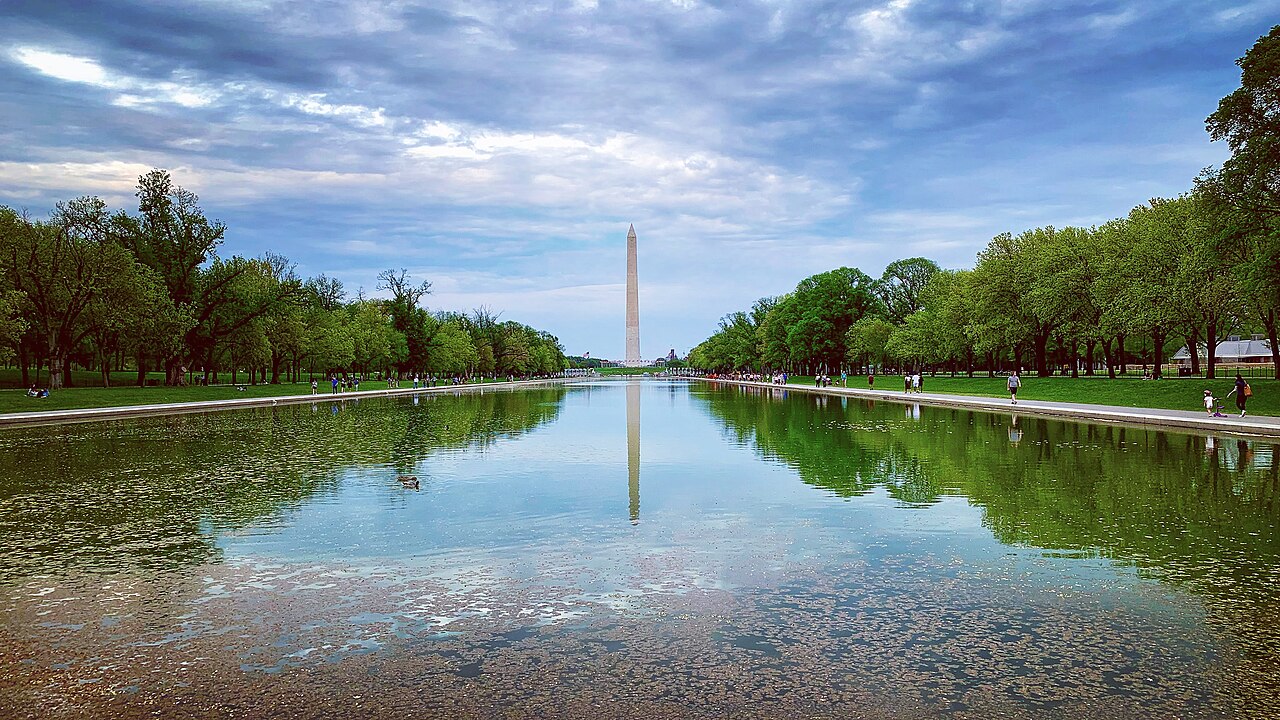
Lincoln Memorial Reflecting Pool. Photo: Ali Khan via Wikimedia Commons, CC BY-SA 4.0.
Day 2: Capitol Hill and the museums
Take the morning Capitol tour. It starts in the Capitol Visitor Center under the East Front and takes in the Crypt, the Rotunda and National Statuary Hall. Plan on about 90 minutes including security.
There is an underground tunnel from the Capitol Visitor Center to the Library of Congress's Thomas Jefferson Building, so you can go straight across without going back outside (when the tunnel is open to the public). The Great Hall is the most ornate room in Washington and most visitors don't know it's there.
After lunch, pick two Smithsonian museums. Not four. People try to do four and remember none of them. Our usual pairing is the National Air and Space Museum (the 1903 Wright Flyer and the Apollo 11 command module are both there) and either the National Museum of Natural History or the African American History museum. All Smithsonian museums on the Mall are free.
Day 3: Arlington and Georgetown, or Mount Vernon
Option one stays in the city. Take the Metro Blue Line to Arlington Cemetery station and walk up to the Tomb of the Unknown Soldier for the Changing of the Guard. It runs every hour from October to March and every half hour from April to September. Entry to the cemetery is free. In the afternoon head to Georgetown for the C&O Canal towpath, the waterfront and dinner on M Street.
Option two leaves the city. George Washington's Mount Vernon is about 15 miles south on the Potomac and needs a paid ticket from the estate. Give it at least four hours. If you are traveling with us, this is the day a private driver makes the most difference, since public transit to Mount Vernon is slow.
When to go
Late March to early April is cherry blossom season around the Tidal Basin. It is beautiful and also the most crowded and expensive time of year. September and October are our pick: warm days, lower hotel prices, school groups gone. July and August are hot and humid enough that a full day on the Mall is hard work.
Getting around
The Mall itself is a walking place; the Capitol to the Lincoln Memorial is about 2 miles. For everything else, the Metro is clean and simple, and you can tap a contactless card or phone at the faregates. Don't rent a car for a DC-only trip. Parking near the Mall is scarce and the Metro gets you to every stop on this itinerary.
FAQ
How many days do you need in Washington DC?
Three days covers the Mall, Capitol Hill, two or three museums and Arlington. Add a fourth for Mount Vernon or a slower museum pace.
Is Washington DC expensive to visit?
Hotels are expensive. The sights mostly are not: the monuments, the Smithsonian museums, the Capitol tour, the Library of Congress and Arlington National Cemetery are all free.
Do you need tickets for the Smithsonian museums?
Most do not. The National Air and Space Museum and the National Museum of African American History and Culture use free timed-entry passes, so book those ahead.
Can international visitors tour the White House?
Yes, but the request goes through your country's embassy in Washington, not through Congress. It is not guaranteed.
Plan it with a specialist
Our DC trips include a private guide for the Mall and Capitol Hill, a driver for Arlington and Mount Vernon, and we handle the timed tickets. DC also pairs well with New York and Philadelphia; see our New York and East Coast guide, or talk to a USA specialist.
Sources: Washington Monument fees and tickets, NPS; National Air and Space Museum visitor FAQ; Capitol Visitor Center; Arlington National Cemetery.
Cover photo: U.S. Air Force Tech. Sgt. Andy Dunaway, public domain, via Wikimedia Commons.
Start Planning Your USA Journey
Think about your trip. These ideas are just suggestions for how you can enjoy similar experiences to our experts — your trip will be tailored to what you like.
Be inspired by our sample itineraries, then let us tailor the perfect USA journey just for you.
View all tours in the USA


 Stephen
 Emily
 John
 Juan